Fencing acreage is a different job from fencing a backyard. The runs are long, the ground rolls, there are creeks and tree lines to work around, and the fence has to hold animals that lean on it, rub against it and test it every day. Out past the subdivisions in rural Union County, a lot of property needs exactly this kind of fence.
Two main types of farm fencing
Board fence
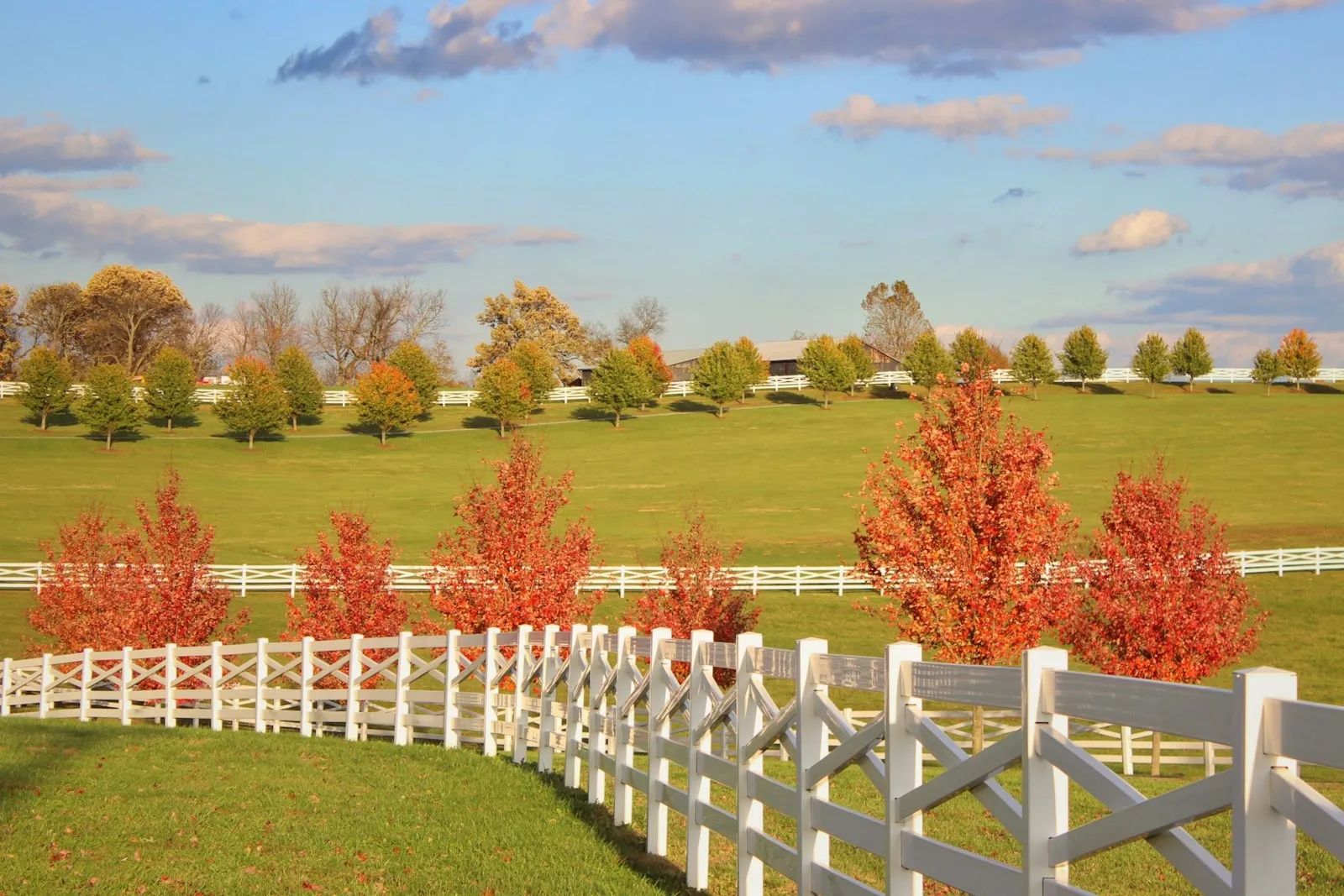
Board fence is the classic look for horse farms and the front of a property: wooden posts with three or four horizontal boards. It is very visible, which helps horses see the fence and keeps them from running into it. It also looks good along a road or driveway.
- Common for horse pastures, paddocks and front property lines
- Usually pressure-treated wood, and can be painted or left natural
- Needs some upkeep: boards get chewed, cracked or knocked loose
Wire field fence
Woven wire field fence is the practical workhorse for keeping livestock in and covering a lot of ground at a reasonable cost. It is stretched tight between wooden posts or a mix of wood and steel T-posts.
- Common for goats, sheep, cattle, and general perimeter fencing
- Different mesh patterns for different animals, with tighter spacing for smaller stock
- Can be topped with a board or extra strand for added visibility
Some owners combine the two, with board fence along the road and around the house, and wire field fence for the back pastures.
Planning checklist for acreage
Before quoting a farm fence, a good contractor walks the property and works through this list:
- What is the fence for? Horses, goats and cattle each need a different design.
- Where are the lines? Have your survey or plat ready. On larger tracts, property corners can be hard to find, and a surveyor may be needed.
- How many gates, and how wide? Think about the widest thing that will ever come through: a tractor, a hay trailer, a truck.
- What is in the way? Creeks, wet low spots, tree lines, rock and steep grades all affect the plan.
- Clearing. Is the fence line clear, or does brush need to come out first?
- Utilities. NC811 marks underground utilities before digging, even out in the country.
How it's built
Corners and gate posts take the strain of a tight wire fence, so they get the most attention. They are set deep, braced, and anchored to resist the pull of the wire. Line posts follow, then boards or wire. Wire is stretched tight and fastened at every post. On rolling ground, the fence follows the land so animals can't slip under the low spots.
Red clay can be hard as brick in a dry August and sticky in a wet spring, so timing and post setting get planned around conditions. Long runs can take several days to a couple of weeks depending on length, terrain and clearing.
What it costs
What sets the price on acreage:
- Fence type: wire field fence usually costs less than board fence for the same run
- Footage and terrain: long, clear, flat runs go up fastest
- Gates: priced separately, by width and type
Rough terrain, heavy clearing and many gates push the total higher. We don't publish prices because no two properties are alike, and your real price comes from a free on-site visit and written quote. See the fence installation cost guide for more on what moves the price.
Plain talk about farm fence
- Cheap corners make a bad fence. If the corner bracing fails, the whole run goes slack.
- Don't buy wire before you know what animal it is for. The wrong mesh lets small stock through or lets hooves get caught.
- Plan gates generously. A gate that is two feet too narrow will annoy you every week.
Closer to the house, many owners pair farm fencing with chain link fencing for a dog yard or an aluminum fence around a pool. For storm damage or sagging runs on an existing farm fence, see fence and gate repair.
Call (980) 414-4919 or request a free quote to set up a walk of your property.
Questions people ask
What is the best fence for horses?
Board fence is a common choice for horses because it is highly visible and has no wire for hooves to catch in. Some owners use a woven wire made for horses, topped with a board for visibility. The contractor can talk through your horses, pasture size and budget during the estimate.
How much fence do I need for my acreage?
It depends on the shape of the land and what you are enclosing, not just the acreage. The actual runs get measured during the on-site visit so the quote is based on real footage.
Can you install fence on hilly or wooded land?
Yes, though slope, rock and trees affect the time and cost. Brush may need to be cleared along the line first. The contractor looks at it on site and explains the plan in the written quote.
How wide should a farm gate be?
Wide enough for the biggest equipment you will ever bring through, with some extra room. Many owners want at least one gate wide enough for a tractor or trailer, plus smaller walk gates where people come and go.